1. Kinematic Mechanics: Why a 165 Degree Concealed Cabinet Hinge Outperforms Standard Hinges
In contemporary kitchen architecture and ergonomic wardrobe construction, the standard 105° or 110° hinge frequently presents a costly physical limitation: carcass edge protrusion. When a cabinet door opens to merely 105°, the door slab remains inside the clear internal perimeter of the carcass opening. When homeowners attempt to pull out full-extension internal drawers, heavy pantry wire baskets, or rotating carousel trays, the drawer side or basket lip inevitably strikes the door edge or the protruding hinge arm.
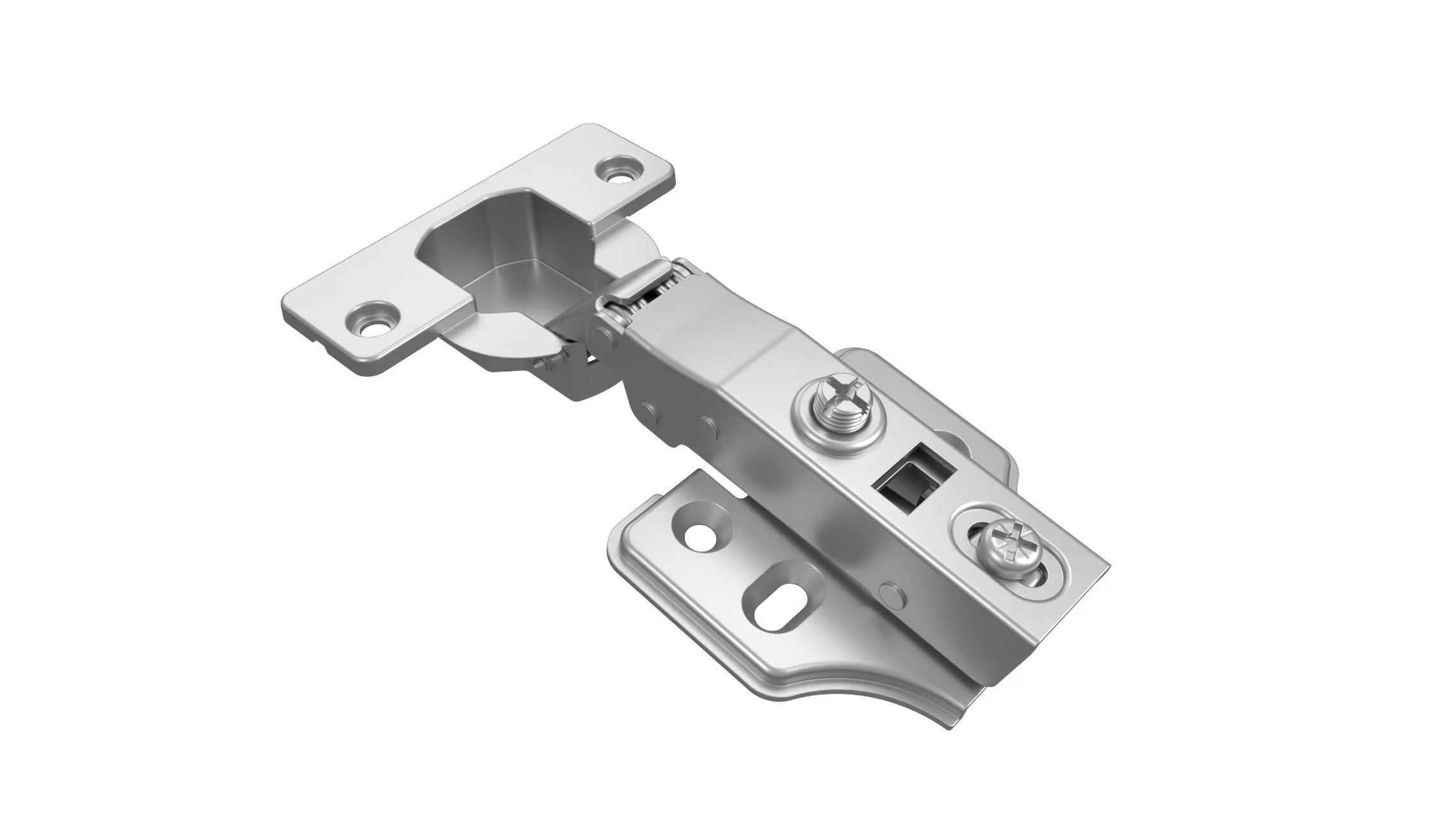
The 165 degree concealed cabinet hinge (frequently referred to in technical joinery as the zero-protrusion hinge or wide-angle hinge) solves this kinematic problem through an intricate 7-point or 9-point compound multi-link pivot mechanism. When the cabinet door reaches approximately 90° of rotation, the compound arm drives the door slab outward away from the cabinet aperture. Upon reaching full 165° rotation, the inner door face is positioned entirely flush with or completely beyond the side gable of the carcass.
Engineering Principle: Zero Protrusion Calculation
For furniture manufacturers specifying interior pantry rollouts or undermount wire pull-outs, zero protrusion is achieved when Door Thickness (T) + Gap (G) - Arm Arc Vector ≤ 0 mm into the cabinet opening. By deploying a precision-stamped 165° mechanism from Xiamen Wudi Hardware Products Co., Ltd., millwork engineers eliminate the need for costly wooden filler blocks and artificial drawer spacing shims, cutting cabinet assembly labor by up to 22%.
2. Critical Technical Comparison: 165° Wide-Angle vs. Standard Concealed Hinges
When sourcing hardware containers for commercial residential builds or retail hardware brands, mechanical engineers must contrast the physical parameters of wide-angle units against conventional standard-overlay hinges. The table below represents empirical lab benchmarks recorded under strict testing procedures.
| Performance Parameter | 165° Zero-Protrusion Hinge | Standard 105°/110° Hinge | 90° Blind Corner Hinge |
|---|---|---|---|
| Opening Arc | 165° to 170° full swing | 105° to 110° standard arc | 90° right-angle stop |
| Clear Aperture Obstruction | 0 mm (Zero Protrusion at 90°+) | 12 mm to 18 mm into cabinet opening | 24 mm to 32 mm protrusion |
| Arm Joint Mechanism | 7-Link / 9-Link compound steel levers | Single or dual pivot link | Single dog-leg offset hinge arm |
| Hinge Cup Specifications | 35mm diameter, 11.5mm - 12.0mm depth | 35mm diameter, 11.5mm depth | 35mm diameter, 11.5mm depth |
| Applicable Door Thickness | 16 mm to 26 mm (Up to 30mm with chamfer) | 14 mm to 22 mm standard panels | 16 mm to 22 mm panels |
| Max Door Load Capacity | Up to 25 kg per pair (Cold rolled steel) | Up to 16 kg per pair | Up to 14 kg per pair |
| Internal Storage Clearance | 100% unrestricted rollout clearance | Requires 25mm spacer or hinge blocker | Requires heavy inner blanking strip |
| Salt Spray Corrosion Rating | 48h to 96h neutral salt spray (ASTM B117) | 24h to 48h standard nickel | 24h to 48h standard nickel |
3. Curated Product Recommendations: Premium 165° Hinges for Global Importers
As an Intertek onsite-verified Chinese export leader, Xiamen Wudi Hardware Products Co., Ltd. produces customized hinge solutions tailored to European metric frameless cabinets, American face-frame assemblies, and heavy commercial architectural millwork.

Heavy-Duty Clip-On 165° Hydraulic Soft Close Hinge
Engineered for high-end bespoke kitchens with interior tandem drawer boxes. Features an integrated silent copper cylinder that initiates smooth hydraulic deceleration at 45°.
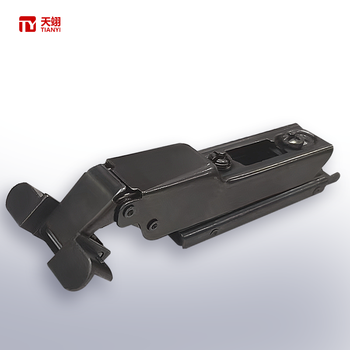
Matte Black Electroplated 165° Zero-Protrusion Hinge
Specifically curated for dark walnut, slate grey, and minimalist luxury wardrobe applications. Exceptional salt spray performance and anti-scratch surface treatment.
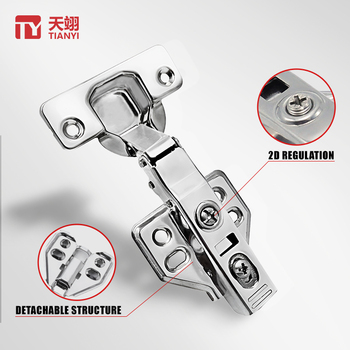
Stainless Steel 304 165° Kitchen & Outdoor Hinge
Engineered for high-humidity coastal markets, outdoor kitchens, and laboratory casework. Resists harsh cleaning chemicals, chlorine, and airborne saline humidity.

Slide-On High-Volume 165° Furniture Hinge
Cost-optimized for large-scale multi-family housing developments, flat-pack RTA modular furniture, and commercial office filing cabinets where speed and price dominate.
4. Production Reality & Rigorous Quality Control Process
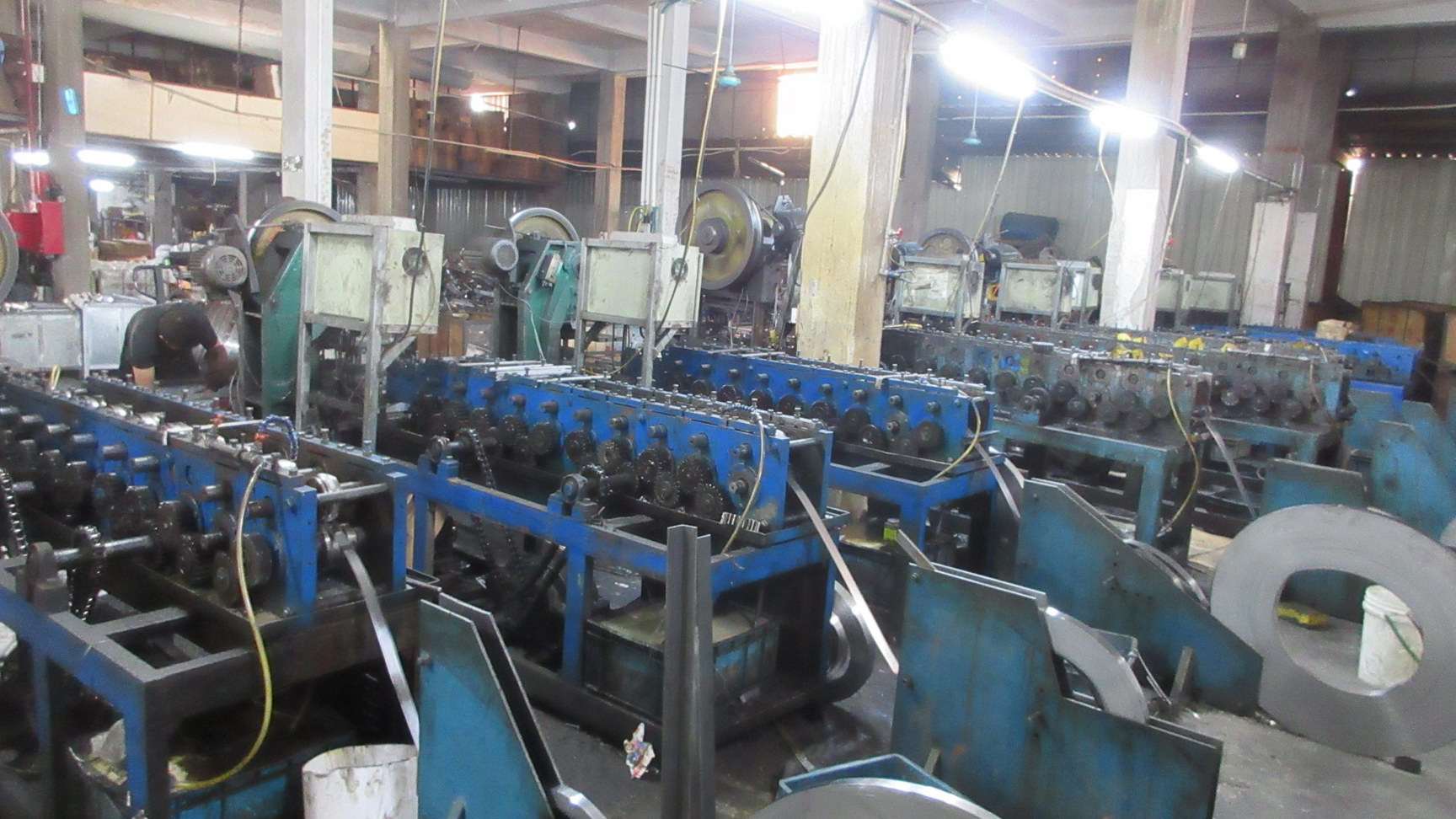
In evaluating B2B hardware suppliers, experienced purchasing directors know that visual appearance alone does not guarantee structural reliability. Multi-link wide-angle hinges contain nearly triple the stamped components of a regular 110° hinge. Every pivot rivet, spring seat, and mounting link must be calibrated to within ±0.05 mm precision to eliminate door sagging and binding.
At Xiamen Wudi Hardware Products Co., Ltd., every batch of 165 degree concealed cabinet hinges undergoes three non-negotiable verification gates:
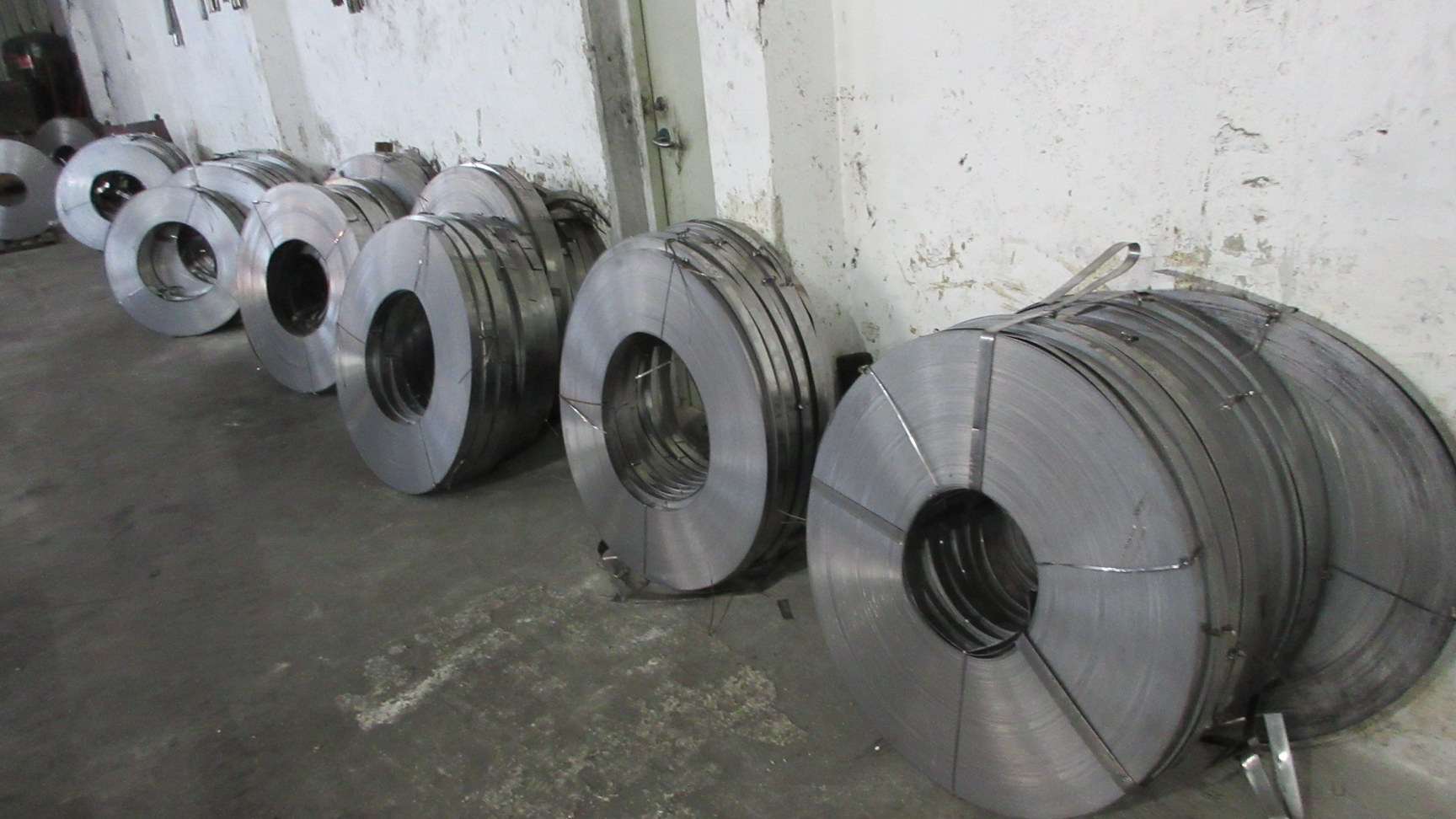
- Raw Material Tensile Inspection: Spectrometric testing of incoming cold-rolled steel coils to verify carbon content, elastic limit, and absence of micro-fractures during heavy progressive stamping.
- Endurance Kinematic Cycling: Testing under simulated 19mm MDF and solid hardwood door loads (up to 20 kg per door) through automated pneumatic opening arms up to 80,000 cycles according to EN 15570 Level 3 standards.
- Corrosion Resistance Verification: Continuous exposure in closed neutral salt spray chambers to ensure nickel electroplating thickness satisfies ISO 9227 and ASTM standards without surface pitting.
5. Future Technological Evolution of Wide-Angle Hinges
The architectural hardware sector is undergoing substantial innovation driven by minimalist design preferences, hidden luxury aesthetics, and automated cabinetry. Over the next five years, B2B buyers should anticipate four decisive technological milestones in 165 degree concealed cabinet hinges:
- Ultra-Compact Compound Linkage: Conventional 165° hinges feature a pronounced joint head that occupies cabinet top space. Emerging prototypes deploy nested, ultra-flat linkage arms that reduce the folded hinge depth inside the cabinet by 35%, granting even greater freedom to upper corner shelf designers.
- Integrated Dual-Action Damping: Next-generation models feature a dual-stage damper capable of adjusting soft-close damping speed based on door weight and angular momentum, preventing light doors from stalling at 15° and heavy doors from slamming shut.
- Direct Push-to-Open Integration: Eliminating cabinet handles entirely, future 165° designs integrate mechanical reverse springs and electronic push-release pins directly into the wide-angle mounting plate, delivering seamless touch-open operation on corner cabinets.
- Sustainable Trivalent & Eco-Plating: Global import regulations (such as EU RoHS and REACH) are compelling manufacturers to replace traditional hexavalent chrome and cyanide copper baths with eco-friendly trivalent passivation and waterborne protective sealants without degrading salt spray endurance.
6. Strategic Global Sourcing Trends: What B2B Buyers Must Prepare For
Procurement directors at European distributors, North American millwork consortiums, and Australasian cabinet chains are adapting their purchasing strategies to navigate geopolitical supply chains, rising freight dynamics, and margin pressures:
Consolidated Multi-Category Procurement: Importers no longer wish to purchase hinges from one plant in Guangdong, drawer runners from another in Zhejiang, and sink basins from Fujian. Consolidating wide-angle hinges, 3D undermount slides, pull-out pantry baskets, and sinks into single 40ft high-cube containers drastically reduces port documentation overhead, reduces ocean LCL tariffs, and accelerates inventory turns.
Rise of Private Label Customization: Brand differentiation in retail building centers requires custom hinge arm stampings, personalized nylon clip covers, and tailor-made blister packaging. Partnering with agile suppliers that accommodate private branding at competitive thresholds allows distributors to build enduring equity in their regional markets.
Shift Toward DDP Door-to-Door Fulfillment: International logistics complexities make delivered-duty-paid (DDP) agreements increasingly attractive. Importers avoid sudden demurrage, complex customs clearances, and inland transshipment headaches by relying on a vendor with integrated freight networks.