Selecting Door Hardware for an international project involves more than comparing catalog prices. A lever that feels solid in a showroom may perform differently after years of frequent use. Buyers also need to consider finish consistency, installation details, replacement parts, and the supplier’s ability to communicate clearly across time zones.
This guide introduces 10 manufacturers that global buyers may want to evaluate. It focuses on practical factors: product range, manufacturing experience, customization options, quality documentation, and after-sales support. These details matter when a project includes hundreds of matching handles, hinges, locks, or door closers. A small finish mismatch can stand out across an entire hotel corridor. So can a delayed shipment.
The right choice depends on the project. A residential renovation may prioritize design and easy installation, while a commercial specification may require durable components and clear performance information. Buyers should confirm current product details directly with each manufacturer, since collections and service coverage can change. No shortlist can fit every market. That is worth remembering. A respected brand may still be a poor match for a particular budget, lead time, or local distribution need. This comparison is a starting point, not a substitute for checking samples, specifications, and support terms.
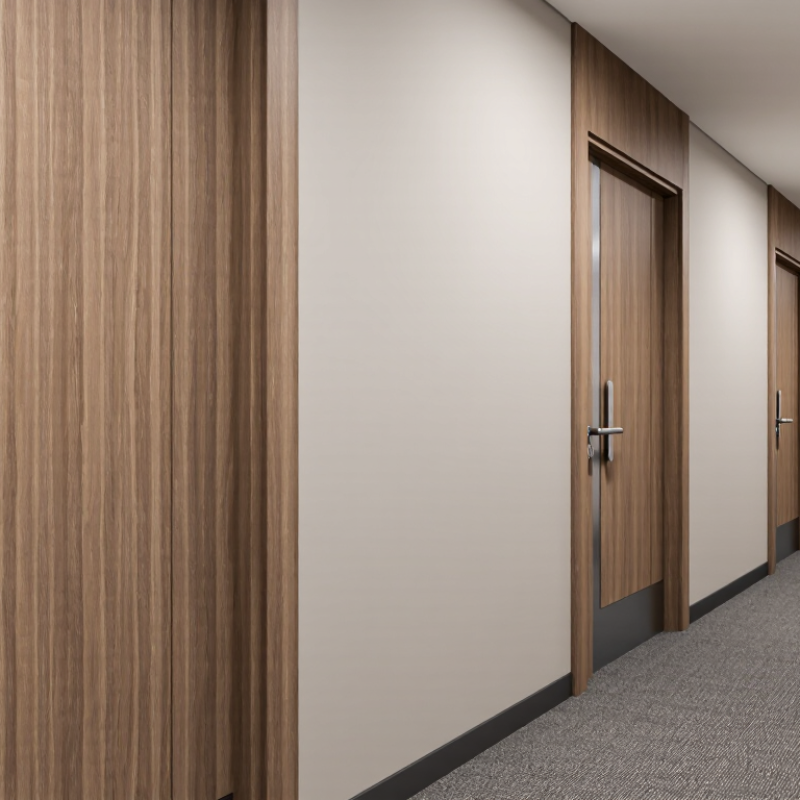
Global door hardware covers more than handles and hinges. Buyers may need locks, closers, panic devices, pivots, pulls, and access-control components. Each category serves a different door type and operating condition. A closer for a light interior door may struggle on a heavy entrance door exposed to wind. Details matter.
Start with the door’s material, weight, thickness, and use frequency. Then check finish options, corrosion resistance, fire-rating documentation where required, and compatibility with local door preparations. Ask suppliers for dimensional drawings, installation instructions, and sample testing records. Useful evidence beats polished catalog language. For large orders, confirm packaging, spare-part availability, lead times, and how quality issues are handled. A small mismatch in backset or screw placement can delay an installation across an entire site.
Requirements vary by market and project, so one specification rarely fits every shipment. Clarify applicable standards with qualified local professionals rather than relying on assumptions. Request consistent product samples from the intended production run, not just a showroom piece. Check that labels and cartons identify models clearly. This is often overlooked. Price still matters, but low-cost hardware can create service calls, replacement work, and unhappy building users. No checklist removes every risk; even careful buyers can miss a detail. The practical goal is to make those misses less expensive.
Global buyers should compare door-hardware manufacturers against measurable requirements, not catalog size. A coastal hotel, school corridor, and apartment entrance face different corrosion, cycle, and access demands. For mechanical locks and exit devices, check the applicable ANSI/BHMA A156 standard and performance grade. In Europe, EN 1906 classifies lever handles and knobs across eight categories, including durability, corrosion resistance, and security. Request the test edition, grade, and laboratory report. A generic “compliant” claim is not enough.
Fire-rated openings need separate scrutiny. NFPA’s Home Structure Fires report estimates an average of 344,600 U.S. home structure fires each year from 2018 to 2022. This is not a hardware-failure statistic, but it shows why tested fire-door assemblies and compatible components matter. Verify the scope of each listing, the coordination of closers and latches, and the installation instructions. A strong test result can be weakened by an unapproved substitute. Paperwork matters. Field conditions can be messier than the specification sheet suggests.
Tips: Compare identical product types and test grades. Ask about spare-part availability, warranty terms, and local technical support. Keep report numbers with each quotation. One gap often overlooked: confirming that the tested configuration matches the door actually being purchased.
ANSI/BHMA A156.2 cycle ratings help buyers compare cylindrical lock durability. Depending on grade, testing typically spans 200,000 to 800,000 operating cycles. Grade 1 products are generally tested to the highest cycle level, while Grades 2 and 3 have lower thresholds. Exact requirements can depend on the standard edition and product classification, so check the current test documentation.
A cycle represents a lock operating through a defined sequence, not simply a key turning once. In a busy office, repeated entry can add up quickly: imagine a latch moving hundreds of times each day, with users pushing the lever at different angles. Higher cycle performance may suit heavy traffic, while a quieter side entrance may not need the same rating. That matters. But cycle counts are not a crystal ball; installation, door alignment, maintenance, and misuse also affect service life.
When comparing suppliers, ask for the grade, applicable A156.2 edition, and evidence supporting the stated rating. Confirm that the tested configuration matches the hardware being quoted, including the lock function and finish where relevant. A polished specification sheet is useful, but it is not the test report. It is easy to focus on the largest number and overlook fit, repair access, or replacement-part availability. That happens. A practical choice balances verified cycle performance with the door’s actual traffic and operating conditions.
| No. | Buyer Evaluation Area | What to Verify | Practical Specification or Benchmark | Why It Matters |
|---|---|---|---|---|
| 1 | ANSI/BHMA performance certification | Confirm the exact product type, standard, grade, and edition shown on the test report or certification. | ANSI/BHMA A156.2 covers bored and preassembled locks and latches. Common cycle benchmarks are 1,000,000 for Grade 1, 400,000 for Grade 2, and 200,000 for Grade 3. | Cycle requirements depend on the applicable product category and standard. Do not treat 800,000 cycles as a universal A156.2 grade threshold. |
| 2 | Intended application | Match the lockset to the opening, traffic level, and use case. | Typical applications include residential, light commercial, and high-use commercial doors. | A product suitable for a low-traffic interior door may not be suitable for a busy entrance. |
| 3 | Door preparation and fit | Check door thickness, bore diameter, backset, edge-bore dimensions, and handing requirements. | Common U.S. cylindrical-lock backsets include 2-3/8 in and 2-3/4 in; verify the product template for exact dimensions. | Compatibility reduces field modifications, installation delays, and return costs. |
| 4 | Fire-door suitability | For fire-rated openings, confirm the complete hardware assembly is listed for the required door and frame rating. | Use listed hardware and follow the door, frame, and hardware manufacturers’ installation instructions. | A fire rating cannot be assumed from the lock’s material or appearance alone. |
| 5 | Accessibility | Review operating force, operating method, mounting position, and applicable local accessibility rules. | Lever-operated hardware is commonly selected where accessible operation is required; applicable requirements vary by jurisdiction and opening. | Correct selection supports usable access and helps meet project requirements. |
| 6 | Material and finish | Request the base material, finish description, and finish-performance documentation for the intended environment. | Common hardware materials include steel, stainless steel, brass, and zinc alloys; finish durability depends on material, coating, and exposure. | Coastal, humid, and high-contact locations may require more corrosion-resistant choices. |
| 7 | Keying and cylinder options | Confirm keyway compatibility, key control, master-key requirements, and available cylinder formats. | Specify the keying system and cylinder format before production or ordering. | Clear keying requirements help prevent retrofit work and simplify future rekeying. |
| 8 | Environmental and corrosion testing | Ask for test methods, results, and the limits of any environmental claims. | Corrosion performance should be assessed against the project’s exposure conditions and the relevant test specification. | A test result is meaningful only when its method and applicability are documented. |
| 9 | Documentation and traceability | Request installation instructions, product data sheets, warranty terms, and batch or lot identification where available. | Documents should identify the model and the applicable certification or test scope. | Complete records support inspection, maintenance, and replacement planning. |
| 10 | Export and supply readiness | Confirm packaging, labeling, lead time, spare-part availability, and destination-market compliance. | Check shipping terms, carton quantities, product markings, and any local certification or import requirements before placing an order. | Requirements differ by market; written confirmation helps reduce customs and delivery problems. |
Choosing among ten door hardware manufacturers requires more than comparing catalog pages. Global Construction Perspectives and Oxford Economics’ 2023 Global Construction Futures report forecasts construction output to reach $13.9 trillion by 2037. That growth makes dependable supply important, but it does not prove any supplier can serve your project. Range is not depth. Check whether each manufacturer offers compatible hinges, locks, closers, exit devices, and access-control hardware, with clear product specifications and replacement parts.
Compliance should be checked model by model. For each shortlisted product, request current test reports, certificate scope, and the testing laboratory’s details. Standards such as EN 1906, EN 179, EN 1125, and relevant ANSI/BHMA A156 standards cover different hardware types and uses; they are not interchangeable. Match evidence to the project’s location and door function. Not just logos. A certificate for one product family may not cover the item in your quotation.
Export capability is equally practical. Compare published lead times, packaging details, spare-part availability, technical-document languages, and experience preparing shipping documents. Ask for a recent example of an order delivered to a similar market, with sensitive customer details removed. A polished export map proves little. I would score documented service higher than broad claims, though a checklist can miss the small problems that surface after installation.
A polished finish is not proof of reliable door hardware. Ask suppliers for test reports that match the exact product, finish, and configuration you plan to buy. Check cycle-test results, corrosion exposure, load capacity, and performance after repeated use. Small details matter. Confirm whether testing was conducted by an independent laboratory, and request the report date and sample identification. A report for a similar model may not reflect the hardware arriving at your site.
Lead times need evidence, not just an optimistic estimate. Request separate schedules for sample approval, production, inspection, and shipping. Ask what happens when a component is delayed, and whether partial shipments are possible. Compare quoted dates with recent delivery records, while recognizing that seasonal demand can change capacity. Get it in writing. A supplier’s response to one difficult question can reveal more than a polished catalog.
Read warranty terms before comparing prices. Check coverage periods, exclusions for finishes or high-use settings, claim documentation, and who pays return freight. Then calculate total cost of ownership: unit price, installation time, replacement parts, maintenance, and likely downtime. A cheaper lever may require frequent adjustment; a better-tested assembly may cost less over years. Still, projections are imperfect. Ask for assumptions behind them, and leave room for a supplier’s figures to be wrong.
A practical framework for comparing manufacturers on testing, lead times, warranty, and total cost of ownership.
These percentages are illustrative buyer-selected weights, not market research or ratings of specific manufacturers. Adjust them to reflect your product requirements, destination market, and purchasing priorities.
Options include locks, closers, panic devices, pivots, pulls, hinges, and access-control components. Each suits different doors and conditions.
Check the door’s material, weight, thickness, and use frequency. Also verify finish, corrosion resistance, and compatibility with existing preparations.
Ask for dimensional drawings, installation instructions, and sample test records. For larger orders, confirm lead times, packaging, spare parts, and how defects are handled.
Ratings typically range from 200,000 to 800,000 operating cycles, depending on grade. Higher grades generally undergo more cycles. Check current test documents.
It is a defined lock operation sequence, not just one key turn. A busy office may cycle a latch hundreds of times daily.
No. Door alignment, installation, maintenance, and rough use matter too. A large number alone can mislead.
Confirm the grade, test-standard edition, and tested configuration. Check that the quoted lock function matches the test evidence.
A showroom sample may not match a large shipment. Check dimensions, labels, and carton model details. Small mismatches can delay installation.
Not necessarily. Lower upfront cost may mean service calls or replacement work later. Even careful buyers miss details sometimes.
This guide explains how global buyers can assess Door Hardware across categories such as locks, levers, hinges, closers, and access components. It outlines the different needs of residential, commercial, and institutional projects, then presents practical criteria for comparing manufacturers across markets, including product range, material quality, finish options, documentation, and export readiness. For lock performance, the guide highlights ANSI/BHMA A156.2 grades and the stated range of 200,000 to 800,000 operating cycles, helping buyers connect test ratings with expected use and durability.
A structured review of ten manufacturers can help buyers compare compliance evidence, customization, production capacity, and international shipping capability without relying on a single factor. Before choosing a supplier, buyers should verify relevant test reports, confirm lead times and warranty terms, and assess communication and after-sales support. Comparing the full cost of ownership—including installation, maintenance, replacement, and shipping—can provide a clearer basis for selecting hardware that fits project requirements and long-term budgets.