Cabinet Hardware may be small, but it changes how a cabinet looks and feels every day. A brushed-brass pull can warm white shaker doors, while a matte-black knob creates a sharper contrast. The right choice depends on more than appearance. Hand comfort, cabinet proportions, finish durability, and installation all matter. A beautiful handle that catches sleeves or feels awkward can become annoying quickly.
Designer William Morris offered a useful principle: “Have nothing in your houses that you do not know to be useful, or believe to be beautiful.” That idea fits Cabinet Hardware well. Choose pieces that serve a clear purpose and suit the room’s character. Before buying, compare knobs and pulls against actual cabinet doors, not just small online images. Check the center-to-center measurement for existing holes, and test whether the hardware feels comfortable in your hand. Small details count.
This guide explores styles, materials, finishes, sizing, and practical installation considerations. It also considers how hardware works with cabinetry, faucets, lighting, and the room’s overall palette. There is no single perfect choice. A polished finish may show fingerprints; a textured one may collect dust in its grooves. Even a careful selection can feel slightly different once installed across an entire kitchen. That is worth remembering. The goal is not to follow a trend blindly, but to choose Cabinet Hardware that looks intentional, works reliably, and still feels right after daily use.
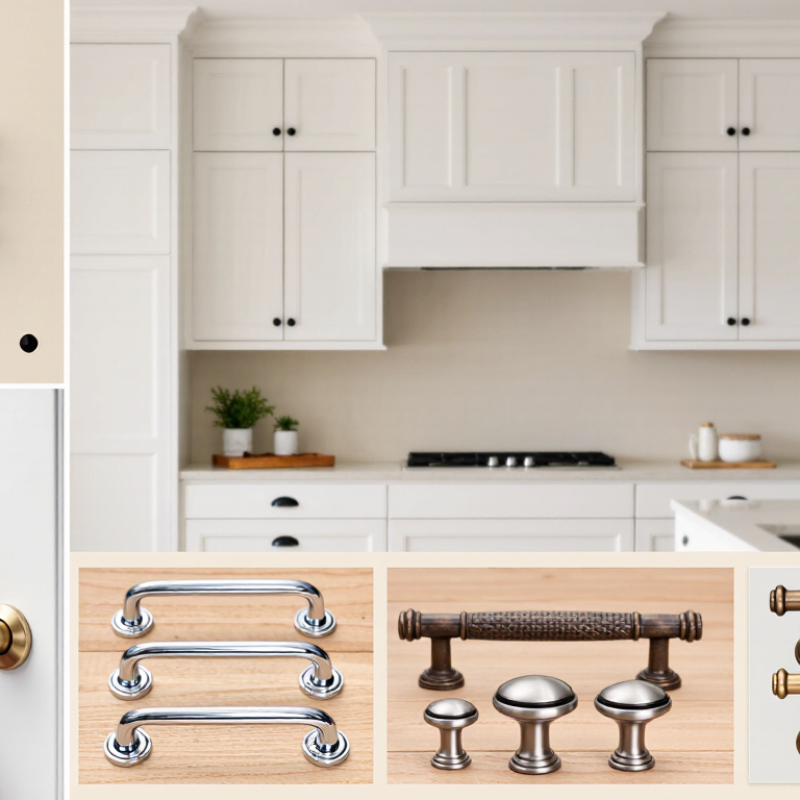
Cabinet hardware should suit the cabinet, not just the room’s color palette. Houzz’s 2024 U.S. Kitchen Trends Study found that 87% of renovating homeowners upgraded cabinets. Hardware is one small part of that larger decision. On shaker doors, simple knobs keep the frame’s lines clear; longer pulls can make wide drawers easier to open. Small details matter.
Think about what each cabinet holds and how often you use it. Pots and stacked plates make loaded drawers heavier, so test pulls with a full drawer if possible. Round knobs may be less comfortable for wet hands or a limited grip. AARP’s 2021 Home and Community Preferences Survey found that 77% of adults aged 50 and older want to remain in their homes long-term. Comfortable hardware can matter at any age.
Match the shape and finish to the room’s style, but check the hardware in your actual lighting. A sample that looks warm in a showroom may appear too yellow beside your cabinets at home. Measure existing holes before choosing replacements; otherwise, installation may require extra drilling or patching. That detail is easy to miss. For busy kitchens, compare finishes for fingerprints and cleaning needs, then handle samples before committing. I’d still reconsider a choice if it feels awkward after a few test openings.
Choosing between knobs, pulls, and specialty hardware starts with how you use each cabinet. Knobs suit doors and keep the look visually quiet. Pulls give fingers more room, especially on wide drawers or heavy pantry doors. Houzz’s 2024 U.S. Kitchen Trends Study found that 76% of renovating homeowners upgraded their cabinets. Hardware deserves attention during that work: it affects daily comfort, not just appearance.
Try a knob on a door and a pull on a drawer before ordering a full set. A small sample can reveal an awkward grip or a finish that looks different in your kitchen light. Small test, big help. Cup pulls add a traditional feel, while edge pulls sit nearly flush for a cleaner profile. Appliance pulls are larger and sturdier; they can make an integrated refrigerator easier to open. Check screw spacing and door thickness, too. Replacing hardware later may leave visible holes.
Match the shape to the task, not only the cabinet style. People with limited grip strength may find a longer pull easier to use than a small knob, though preferences vary. I sometimes underestimate how much a sharp-edged pull catches a sleeve. Look for rounded edges and enough clearance for fingers. Mixing knobs and pulls can work well, but too many shapes may make a small kitchen feel busy. A simple layout is often easier to live with.
Cabinet hardware should feel balanced against the door or drawer, not merely look attractive on a sample board. On a narrow drawer, a small knob can feel comfortable; a wide drawer often benefits from a longer pull or two knobs. A useful starting point is choosing a pull about one-third the drawer’s width, then checking it in place. This is a guide, not a rule. Oversized pulls can dominate slim fronts, while tiny hardware may be awkward to grip.
Tips: Cut paper templates and tape them to the cabinets before drilling. Open each door and drawer to check clearance. For doors, knobs often sit opposite the hinges, near the lower corner of upper cabinets and the upper corner of lower cabinets. Pulls are commonly placed vertically on doors and horizontally on drawers. Keep placements consistent across matching cabinets. Small shifts are noticeable.
Measure twice. Mark the center points, then step back and view the layout from across the room. Check the hardware against cabinet rails and panel details; a pull that looks centered on the whole door may feel crowded beside a raised panel. I’ve found that templates save time, though they can still be off if the cabinet fronts vary slightly. Test one piece before drilling the rest.
Cabinet hardware gets touched every day, so material matters as much as appearance. Stainless steel resists corrosion and suits busy kitchens, while solid brass feels substantial and can develop a changing patina if left unsealed. Zinc alloy is often more affordable, but quality and coating thickness vary. Check the weight, edges, and mounting screws before buying; a beautiful pull can still feel flimsy. There is no perfect choice.
Finishes affect both upkeep and what you notice. Brushed nickel and matte finishes tend to disguise fingerprints, while polished surfaces show smudges more readily. Unlacquered brass may darken unevenly, which some homeowners enjoy and others find frustrating. Sealed finishes keep a more consistent look, but harsh cleaners can dull their coating. Wipe hardware with a soft, damp cloth and mild soap, then dry it. Test a sample under your kitchen lighting first; I’ve found that a finish can look warmer in a shop than beside pale cabinets.
Tips: Match the finish to your cleaning habits, not just a photo. Keep one spare screw, and check loose pulls occasionally. Avoid abrasive pads; small scratches are hard to undo.
Before choosing a pull or knob, measure the cabinet door and drawer fronts. Check the thickness, edge clearance, and distance between existing screw holes. For pulls, record the center-to-center measurement—not the overall length. A 96 mm pull, for example, needs holes spaced exactly 96 mm apart. Also check whether a knob’s base will sit flat on a beveled or framed surface. Small mismatches can mean filling holes and refinishing a visible area. The 2024 U.S. Houzz & Home Study identifies kitchens as a leading renovation project, a useful reminder that hardware decisions affect many repeated touchpoints.
Tips: Make a drilling template from scrap wood or sturdy card. Test it on one door before drilling the rest. Confirm screw length against the combined thickness of the hardware and cabinet front; screws that are too long may protrude inside. Keep a sample piece of hardware nearby while measuring. It is easy to misread a ruler when working across several drawers.
Plan the installation around actual use, too. Mark pull positions with painter’s tape, then open nearby doors and drawers to check for collisions. Consider the user’s grip and reach, especially on tall pantry doors. If replacing existing hardware, photograph each location and label removed screws. I still find that one measurement gets missed when a kitchen has mixed drawer sizes, so recheck before drilling. For durability, look for published testing information; ANSI/BHMA A156.9 provides performance criteria for cabinet hardware components.
Simple knobs keep the door frames visually clear. Longer pulls can make wide drawers easier to open.
Test a knob on a door and a pull on a drawer. Open them several times, and notice whether your fingers feel cramped. Small test, big help.
Pots and stacked plates can make drawers heavy. A longer pull may offer a steadier grip than a small knob, but test it with a loaded drawer.
Not always. Wet hands or limited grip strength can make small knobs harder to use. A longer pull may feel easier, though preferences vary.
Check samples beside your cabinets in your own kitchen lighting. A warm finish in a showroom may look too yellow at home.
Measure the distance between existing screw holes, along with door thickness. Otherwise, you may need extra drilling or patch visible holes.
Cup pulls add a traditional look, while edge pulls sit nearly flush. Larger appliance pulls can make integrated refrigerators easier to open.
Yes. Knobs on doors and pulls on drawers can feel practical, but too many shapes may make a small kitchen look busy. I might still rethink the mix after seeing it installed.
Compare finishes for fingerprints and cleaning needs. Look for rounded edges and enough finger clearance; sharp edges can catch sleeves.
Choosing Cabinet Hardware starts with understanding the cabinet style, how each cabinet is used, and what kind of access feels most convenient. Knobs, pulls, and other hardware options offer different looks and handling benefits, so consider who will use the space and how often. Next, select a size and scale that suit the cabinet doors and drawers, then plan consistent placement that feels comfortable and looks balanced.
Compare materials and finishes for appearance, durability, and the amount of care they require. Some surfaces may need more frequent cleaning, while others are better suited to everyday use. Before purchasing, check that the hardware fits the cabinets and that the required mounting method and measurements work with the existing setup. Careful planning helps create a cohesive, practical result and makes installation more straightforward.