0%

Furniture Hardware is easy to overlook until a cabinet door sags, a drawer sticks, or a handle loosens in your hand. These components connect, move, support, and secure furniture. They include hinges, drawer slides, knobs, pulls, locks, brackets, fasteners, and adjustable feet. Small parts. Big consequences.

Furniture designer Charles Eames captured the value of detail when he said, “The details are not the details. They make the design.” His observation applies to hardware: a hinge affects how a door opens, while a slide determines whether a loaded drawer glides smoothly. Choosing fittings involves more than appearance. Material, load capacity, dimensions, installation method, and frequency of use all matter. A bright finish may suit a display cabinet, but a busy kitchen drawer needs dependable movement and a suitable load rating.

This guide explains what Furniture Hardware is and introduces the main types used in homes and commercial spaces. It also looks at how pieces differ, where they are commonly installed, and what to check before choosing them. Some products look interchangeable on a shelf; they may not fit the same drilling pattern or door thickness. That detail is easy to miss. No single fitting is right for every project, and product specifications should be checked before purchase. A careful selection can improve everyday use, though even good hardware cannot correct poor installation or unsuitable furniture design.
What Is Furniture Hardware and What Types Are There?

Furniture Hardware Defined: Components, Functions, and System Boundaries

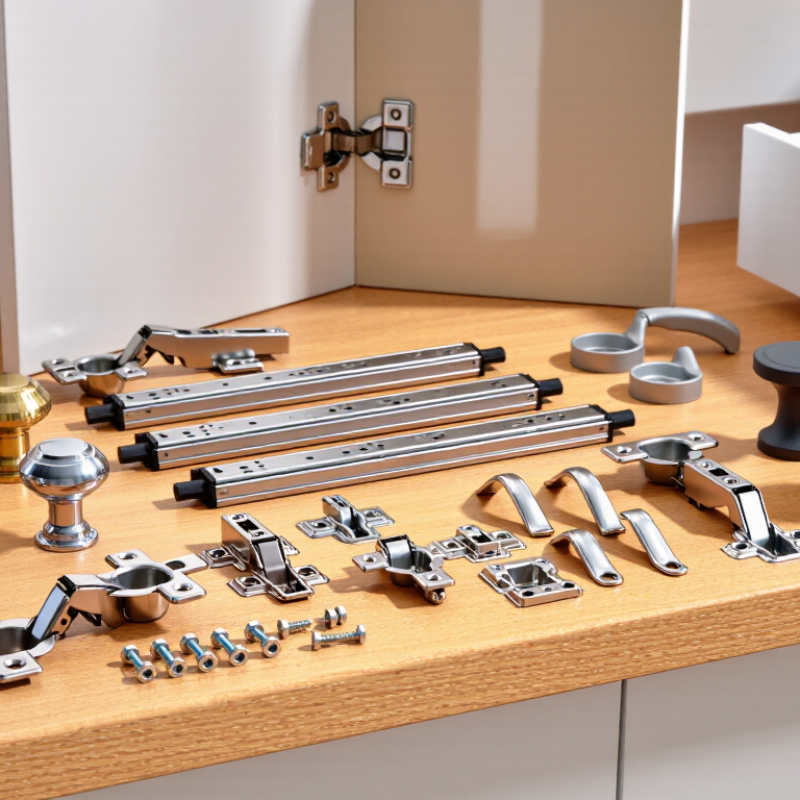
Furniture hardware is the set of components that connects, supports, or moves parts of a piece. It includes hinges, drawer slides, handles, knobs, shelf pins, brackets, and screws. A hinge lets a cabinet door pivot; a slide guides a drawer in and out. Each part has a practical job. Small details matter.

Hardware is not the same as the furniture’s panels, frame, or finish. A wooden drawer front is a furniture component, while its pull and slides are hardware. Fasteners may sit at the boundary: screws connect parts, but they are also often classified as hardware. The line can blur. In practice, the useful question is what a component does within the assembly. A shelf bracket carries a load; a handle gives the user a grip. Fit, material, and installation affect performance, so a component’s name alone cannot confirm it is suitable. Check dimensions and load guidance for the specific application. Replacing one part without checking clearances can cause rubbing or uneven movement.

Main Types: Hinges, Slides, Handles, Connectors, and Supports

Furniture hardware is the working system inside a cabinet, wardrobe, or desk. It controls movement, grip, assembly, and load transfer. Small parts matter. A hinge sets the door’s swing and alignment; concealed hinges often allow adjustment after installation. Drawer slides guide the drawer under load, so their extension length and rated capacity should match its contents.

Handles shape how a user opens a door, but their placement also affects reach and clearance. Connectors, including cam fittings and dowels, hold panels together and influence how easily furniture can be assembled or repaired. Supports such as shelf pins, brackets, and leveling feet help distribute weight and steady furniture on uneven floors. Details count.

CSIL’s World Furniture Outlook 2024 estimates global furniture production at about US$470 billion in 2023. That figure describes the wider furniture industry, not hardware sales, but it shows the scale of products these components serve. In practice, match hardware to panel thickness, expected use, and installation space. A deep drawer needs enough clearance for its slides; a tall door may need more hinge support. Yet extra fittings do not always mean better performance. Selection still depends on the design and how people use it.

Example cabinet hardware count: This illustrative configuration uses 2 hinges for one door, 2 slide members for one drawer, 2 handles (one for the door and one for the drawer), 8 connectors for assembly, and 4 supports. Actual quantities depend on the furniture design and hardware specifications.

How Hardware Is Specified: Materials, Finishes, Dimensions, and Load Ratings

Furniture hardware should be specified as carefully as the panels it connects. A hinge is not just a hinge. Record the hardware’s material, finish, dimensions, and intended use before ordering. Steel components often suit demanding applications, while aluminum can reduce weight. Material choice affects strength, corrosion resistance, and service life.

Finishes change both appearance and performance. A plated or coated surface may help resist moisture, but protection varies by process and environment. Match the finish to where the furniture will be used, especially in kitchens, bathrooms, or entryways. Check dimensions against the actual design: screw length, cup depth, mounting-hole spacing, and clearance can all affect fit. Measure twice. Small errors matter.

Load ratings need careful interpretation. A drawer slide’s stated capacity may depend on installation, drawer width, and how weight is distributed. Compare the rating with the expected contents, leaving a practical safety margin. Also check whether the rating applies to one component or a complete pair. Test a sample assembly with real fasteners when possible; published figures cannot account for every substrate or installation variation. I have seen neat specifications overlook soft cabinet material, and that detail can matter more than the hardware itself. Verify the fit before production.

What Is Furniture Hardware and What Types Are There? — How Hardware Is Specified: Materials, Finishes, Dimensions, and Load Ratings

Hardware Type Typical Use Common Materials Common Finishes Key Dimensions to Specify Load Rating or Rating Method
Concealed cabinet hinge Connects a cabinet door to its frame or side panel while hiding the hinge when the door is closed. Steel; stainless steel in corrosion-resistant applications Nickel-plated, zinc-plated, black-coated 35 mm cup diameter is common; also specify cup depth, overlay, opening angle, and mounting-plate height. No single universal capacity applies. Specify the door’s dimensions and weight, hinge quantity, and the hinge maker’s approved application data.
Drawer slide Supports a drawer as it opens and closes; available in side-mount, under-mount, and center-mount designs. Cold-rolled steel; stainless steel for some environments Zinc-plated, black-coated, stainless steel Specify nominal slide length, required side clearance, extension type, and mounting position. Common lengths are approximately 250–600 mm. Often rated per pair. Some light- to medium-duty products are rated around 35–45 kg per pair, but the exact rating depends on the model, installation, and test method.
Furniture handle or pull Provides a grip for opening a drawer or cabinet door. Zinc alloy, aluminum, stainless steel, brass Brushed, polished, plated, painted, or powder-coated Specify center-to-center hole spacing, overall length, projection, and screw size. Common hole spacings include 96, 128, and 160 mm. Usually specified by product testing or intended use rather than a general furniture load rating. Confirm pull strength and fastener suitability for the panel.
Shelf support Supports a removable or fixed shelf inside a cabinet or bookcase. Steel, stainless steel, zinc alloy, plastic Zinc-plated, nickel-plated, black-coated, molded color Specify pin diameter, insertion depth, shelf-hole spacing, and support style. Common pin diameters include 5 mm and 6 mm. Capacity depends on the support design, number and spacing of supports, shelf material, and load distribution. Use the manufacturer’s stated capacity for the complete installation.
Furniture leg or adjustable glide Supports a table, cabinet, or upholstered furniture frame; an adjustable glide can level it on uneven floors. Steel, aluminum, wood, plastic, or combinations of these Powder-coated, plated, anodized, polished, or clear-coated Specify leg height, mounting plate or stem dimensions, adjustment range, and foot diameter. Check the rated capacity per leg and the recommended number of legs. The assembled furniture’s capacity can be affected by uneven floors and off-center loads.
Furniture connector or cam fitting Joins panels in knock-down furniture and allows the furniture to be assembled and disassembled. Steel, zinc alloy, engineered plastic Zinc-plated, nickel-plated, black-coated, molded color Specify cam diameter and depth, connector-bolt length and thread, panel thickness, and drilling pattern. Capacity is connection-specific and affected by panel material, edge distance, drilling accuracy, and assembly. Use tested system data rather than a generic rating.
Furniture fastener: screw or bolt Secures hardware or joins furniture components. Carbon steel, stainless steel, brass Zinc-plated, stainless steel, black oxide, brass finish Specify thread type, nominal diameter, length, head style, drive type, and material. There is no universal furniture load rating. Joint strength depends on the fastener, substrate, embedment, edge distance, and installation method.

Specification note: Load figures are product- and test-dependent. Confirm the rating basis (per item, per pair, or per assembly), installation requirements, and applicable manufacturer data before selecting hardware for a project.

Cabinet Hardware Testing: Requirements in ANSI/BHMA A156.9

Cabinet hardware may look small, but it carries daily loads. Drawer slides guide heavy drawers, while hinges support moving doors. ANSI/BHMA A156.9 sets performance requirements and test methods for many types of cabinet hardware. The applicable tests depend on the product category and the standard’s current edition.

Testing can assess factors such as operating durability, strength, and finish performance. For example, a drawer slide may be cycled repeatedly under a specified load. A hinge may face tests that evaluate its ability to support a door.

Not every test applies to every item. Grade levels, where specified, distinguish performance levels; they should be checked against the relevant product category. A passing result is useful evidence, but it cannot guarantee identical results in every cabinet. Installation, alignment, and real-world use matter too. Small details can be missed.

Tips: Match the test data to the exact hardware type and intended load. Check that the report identifies the standard edition and tested configuration. If a drawer feels rough, measure the cabinet opening before blaming the slide. It happens.

Storage Unit Durability: Strength Tests Defined by ISO 7170

Furniture hardware includes hinges, drawer slides, fasteners, shelf supports, and handles. These small parts carry repeated loads and shape how a storage unit feels in daily use. Small parts matter. A drawer that scrapes or a loose hinge may signal wear, but appearance alone cannot show structural strength.

ISO 7170 sets test methods for assessing the strength and durability of storage units. In controlled tests, units may face specified loads, repeated opening and closing, and stability checks, depending on their design and test configuration. Evaluators look for loosening, deformation, breakage, or loss of function. Results help compare performance under defined conditions; they do not guarantee identical service life in every home. Real floors, uneven loading, humidity, and hurried assembly can change real-world performance. Not a promise.

Tips: Check that drawers move evenly and doors stay aligned after loading. Keep loads within stated limits, and tighten accessible fixings when needed. A test report should identify the tested configuration, not just say “passed.”

FAQS

What counts as furniture hardware?

Hardware includes hinges, drawer slides, handles, knobs, shelf supports, brackets, and screws. Small parts matter.

How is hardware different from furniture panels?

A wooden drawer front is part of the furniture. Its pull and slides are hardware.

Are screws considered furniture hardware?

Often, yes. They connect parts, so the boundary can be a little blurry.

What should I check before replacing a hinge or slide?

Check dimensions, fit, and load guidance for the specific application. A poor fit can cause rubbing or uneven movement.

What does ISO 7170 assess?

It defines test methods for storage-unit strength and durability. Tests may include loads, repeated movement, and stability checks.

Does a passing test guarantee long service life at home?

No. Floor level, humidity, loading, and assembly can affect performance. Not a promise.

What signs may suggest hardware is wearing?

A drawer that scrapes or a loose hinge may signal wear. Appearance alone cannot show structural strength.

How can I check a storage unit during regular use?

Check that drawers move evenly and doors stay aligned after loading. Keep loads within stated limits, and tighten accessible fixings when needed. I might still miss a small change.

Conclusion

Furniture Hardware refers to the components that help furniture open, close, move, connect, and remain stable. Common types include hinges for doors, slides for drawers, handles for access, connectors for joining panels, and supports that carry or reinforce parts of a unit. Together, these components affect how furniture functions, feels to use, and holds up over time.

Choosing suitable hardware involves considering its material and finish, as well as dimensions and load ratings that match the furniture’s design and intended use. Performance can also be assessed through standardized testing. ANSI/BHMA A156.9 sets requirements for cabinet hardware, while ISO 7170 defines strength tests for storage units. These specifications and tests help designers and manufacturers evaluate whether hardware and furniture assemblies are appropriate for their expected demands.

Ethan

Ethan

Ethan is a professional marketing specialist who combines a strong understanding of the company’s products with a clear, practical approach to communication. He regularly contributes expert blog articles to the company website, helping readers understand product features, applications, and the......