Technical Briefing
The Evolution of Concealed Pivot Systems in Modern Architecture
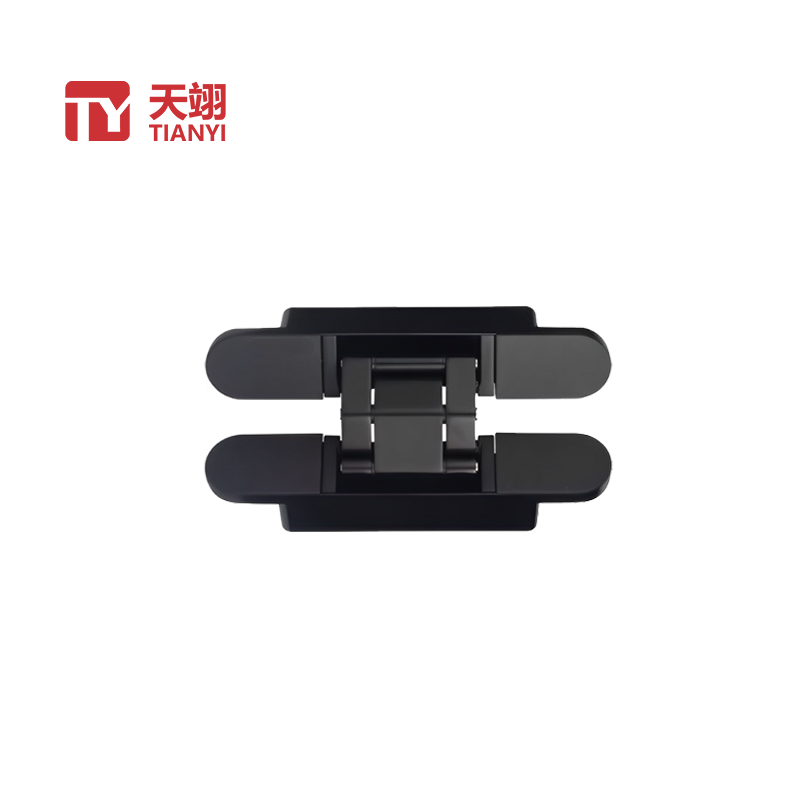
The contemporary interior architectural hardware landscape is experiencing a fundamental shift toward seamless minimalism. Often referred to as "frameless integration," modern residential and commercial door designs demand hardware that remains completely undetectable when the door leaf is in the closed position. This engineering imperative has transformed the invisible door hinge from a niche artisan fitting into a mass-adopted, high-precision industrial commodity manufactured across specialized production hubs in Southern China.
Traditional surface-mounted butt hinges or exposed pin hinges suffer from visual interruption, dust accumulation, and vulnerability to sagging over extended thermal cycles. In contrast, advanced China wholesale invisible door hinge manufacturers leverage high-pressure zinc alloy die casting (Zamak 3 and Zamak 5) alongside cold-extruded structural aluminum and investment-cast SUS304 components. This composite metallurgy ensures maximum load absorption up to 160 kg per pair, while multi-link scissor kinematics permit 180-degree unimpeded opening clearances even on panels clad with heavy acoustic panels, marble veneer, or solid hardwoods.
"Invisible door hinges are no longer mere pivot points—they are dynamic micro-mechanical assemblies. Precision tolerances down to ±0.2 mm within the linkage knuckles are required to eliminate sagging and hydraulic cavitation over a 200,000-cycle lifespan."
Furthermore, the integration of 3D adjustability has solved the single greatest operational headache for joinery contractors: post-installation settlement. With independent screw adjustments for vertical (height), horizontal (depth), and planar (gap) clearance, installation teams can dial in sub-millimeter shadow lines without dismounting the door panel, saving up to 45% in job-site labor overhead.